.jpg)
Monday, 19 August 2013

Tutorials 5
Tutorials 5
Communities of Practice (CoP) refers a group of people having common identity to share, participate and establish a fellowship with these common characteristics.
Common goal
/ \
/ \
/ \
Commitment Virtual Workspace
For an organization, COP may-
Activity
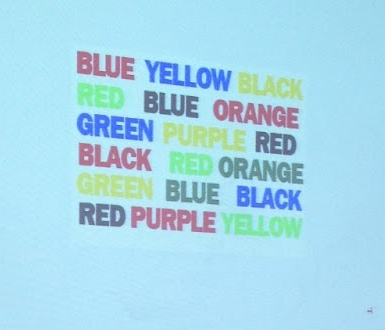
Color game- Read the color of the words...BUT ONLY for 10a.m tutorial groups?
Why 11a.m groups dont have? UNFAIR!!!UNFAIR!!!UNFAIR!!!UNFAIR!!!UNFAIR!!!UNFAIR!!!UNFAIR!!!

Communities of Practice (CoP) refers a group of people having common identity to share, participate and establish a fellowship with these common characteristics.
Common goal
/ \
/ \
/ \
Commitment Virtual Workspace
For an organization, COP may-
- Help drive strategy
- Generates new lines of business
- Promote the spread of best practices
- Develop people's professional skills
- Help recuit and retain talent.
Activity
Color game- Read the color of the words...BUT ONLY for 10a.m tutorial groups?
Why 11a.m groups dont have? UNFAIR!!!UNFAIR!!!UNFAIR!!!UNFAIR!!!UNFAIR!!!UNFAIR!!!UNFAIR!!!
Monday, 8 July 2013
Week 5 ~ Knowledge Sharing and Communities of Practice (CoP)
CoP


- exchange knowledge
- membership: self-selection
- passionate and have group identification
- included in CoP as long as the interest lasts
- share members' concerns
- learn how to solve or do a particular tasks better
The difference of CoP when compared with others are in terms of
- enterprise definition (how is it different)
- it exists over time
for a CoP is function well, it must have:-
- a common purpose
- trust
- sharing instinct
- collective intelligence
_______________________________________________
cant remember much after that because some of us were

Please don't misunderstand.We were taking picture of our notes to be uploaded later..
While most of us were...
It's 8am class...on a Friday..The odds were stacked against us...
Week 4~ Lecture 4
Tacit capture in Individual / Group
- Expert knowledge know-how
- Expert procedural knowledge
- Structured knowledge
- Structured interview (4 techniques)
- Paraphrasing
- Clarifying
- Summarizing
- Reflecting
Stories (Organizational stories)
Advantages are :-
- transmit valuable tacit knowledge
- create sense of belonging
- communicate organizational culture
Codification Techniques
- Cognitive maps
- represent the mental model of a person's knowledge
- Decision Trees
- Knowledge Taxonomy
__________________________
Oh yeah and we had two lecturers in class that day.. Have a look..


We also had to come to campus in a different attire due to the haze... 
the poorer students wore something like this..


Week 3 ~ Lecture
The need for KM model

- Conceptual framework
- So that activities can be coordinated and produce expected KM result
Data
- Set of discrete and objective facts about a particular event
Information
- Message that usually is in the form of a document
Von Krough & Roos Model
~> states that KM requires a connection between
- knowledge and knowledge owner
- knowledge and knowledge seeker
- knowledge owner and knowledge seeker
~> also says that a successful organizational KM requires
- Innovation
- Competition advantage
- Organizational goals
Nonoka & Takeuchi
~> focuses on knowledge spiral which explains the transformation of knowledge until knowledge creation
~> Advantage : provide critical understanding of tacit and explicit knowledge interaction within an organization
Knowledge codification means converting tacit knowledge to explicit knowledge . It also can define as convert undocumented information into document information.Knowledge codification need to representing or organize the knowledge before access.It make institutional knowledge visible, accessible, usable for decision making.
By interviewing experts to capture and codify tacit knowledge in an organisation, we can obtain lesson/practice of each expert, and it can be documented into organisation knowledge respiratory.Beside that, we can acquire great amount of knowledge from each expert.
Below is the activities we do in class:
How to enter a car? > Girls and boys are using different ways~ If girls going grooming class, they can learn how to enter correctly.
By interviewing experts to capture and codify tacit knowledge in an organisation, we can obtain lesson/practice of each expert, and it can be documented into organisation knowledge respiratory.Beside that, we can acquire great amount of knowledge from each expert.
Below is the activities we do in class:
How to enter a car? > Girls and boys are using different ways~ If girls going grooming class, they can learn how to enter correctly.
Nonaka and Takeuchi’s Knowledge Spiral Model involve with four process:
T-T~ Socialization - It is a process that transfer tacit knowledge to tacit knowledge, for example brain storming, mentoring and coaching.
T-E ~ Externalization - A process transfer Tacit Knowledge to Explicit Knowledge, for example interview, written video.
E-E~Combination - A process transfer Explicit Knowledge to Explicit Knowledge, for example convert from text to graph.
E-T~Internalization - A process transfer Explicit Knowledge to Explicit Knowledge, for example decision.
 |
| Nonaka and Takeuchi’s Knowledge Spiral Model
This week lecturer ask us to bring color pencil for activity, we go to Mydin bought one but due to too many people didn't bring so lecturer ask us to draw easy icon : MMU logo and Mcdonald logo~
This activity perform externalization stage in externalization.The accuracy of drawing a correct logo depends on what we remember and how often we contact with it. The conclusion is we need a FRAMEWORK when manage knowledge.
|
Subscribe to:
Posts (Atom)